TL;DR: Agile Workspace Means Choice Among a Diversity of Spaces
If you want your organization to become agile, adding more whiteboards to the workspace will not suffice. You have to abandon the idea that the workspace is an assembly line for white-collar workers. You need to let go Taylorism. We are now in the age of the creative worker.
To become agile – and reap its benefits such as becoming more innovative –, you need a diversity of workspaces to support all forms of creative work: focus, collaborate, learn, and socialize. Also, you have to let your creative workers choose which space is best suited for a task.

The Agile Workspace: A Worthwhile Investment
Why would you spend on creating a diverse workspace in the first place? Because creating it is a sound investment decision.
Based on their proprietary Workplace Performance Index® methodology, Gensler’s “U.S. WORKPLACE SURVEY 2016” uncovers “a statistical link between the quality and functional make-up of the workplace, and the level of innovation employees ascribe to their companies“.
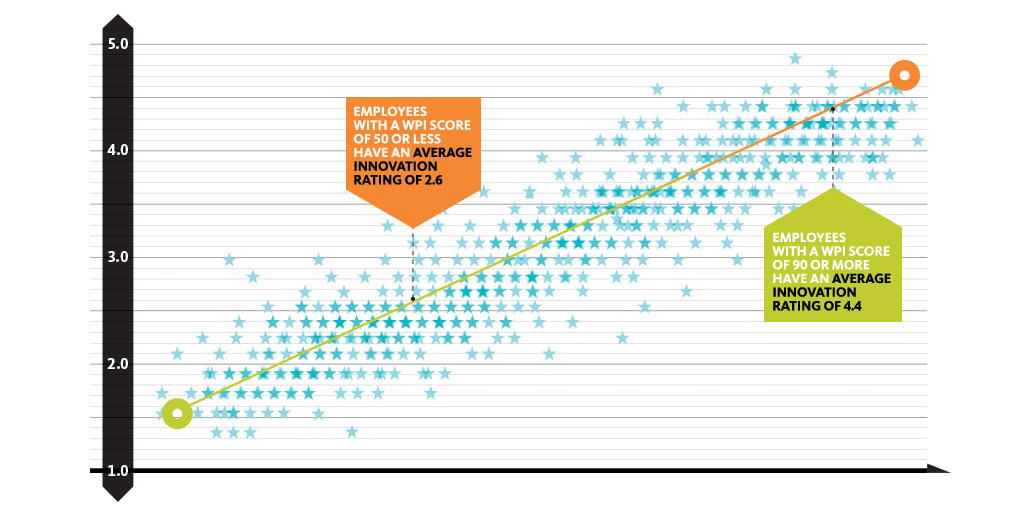
Copyright notice: (c) Gensler.
In other words: If your organization is trying to become agile without investing in the workspace, it may realize a lesser return on investment. It may also fall behind a competitor that has invested in a diverse workspace for its creative workers.
Download the latest Gensler’s survey from 2019 for free.

Agile Workspace Anti-Patterns
Let’s have a look at some typical issues in workspace design that contradict the needs of the creative worker:
- Open floor plans are often considered to be the ideal agile workspace as they nurture collaboration and help to spread news and information, thus keeping everyone in the loop. However, a lot of creative workers feel that the noise and sound level that often accompanies open floor plans challenges their need for focus and deep work. (Read more: “Just shut up and let your devs concentrate, advises Stack Overflow CEO Joel Spolsky”.)
- Having to grab a new desk every morning: This bean counter brainchild is toxic for collaboration among members of agile teams. The policy is likely to scatter a team all over the place instead of co-locating it. It also deprives everyone of an essential part of the psychological safety net – an individual desk — that fosters trust-building and collaboration among team members.
- Scarce availability of whiteboards: Most walls within the workspace of an agile organization should be by default whiteboards to encourage instant collaboration. Glass or brick walls may be aesthetically pleasing but will impede the agile transition as they prohibit spontaneous collaboration.
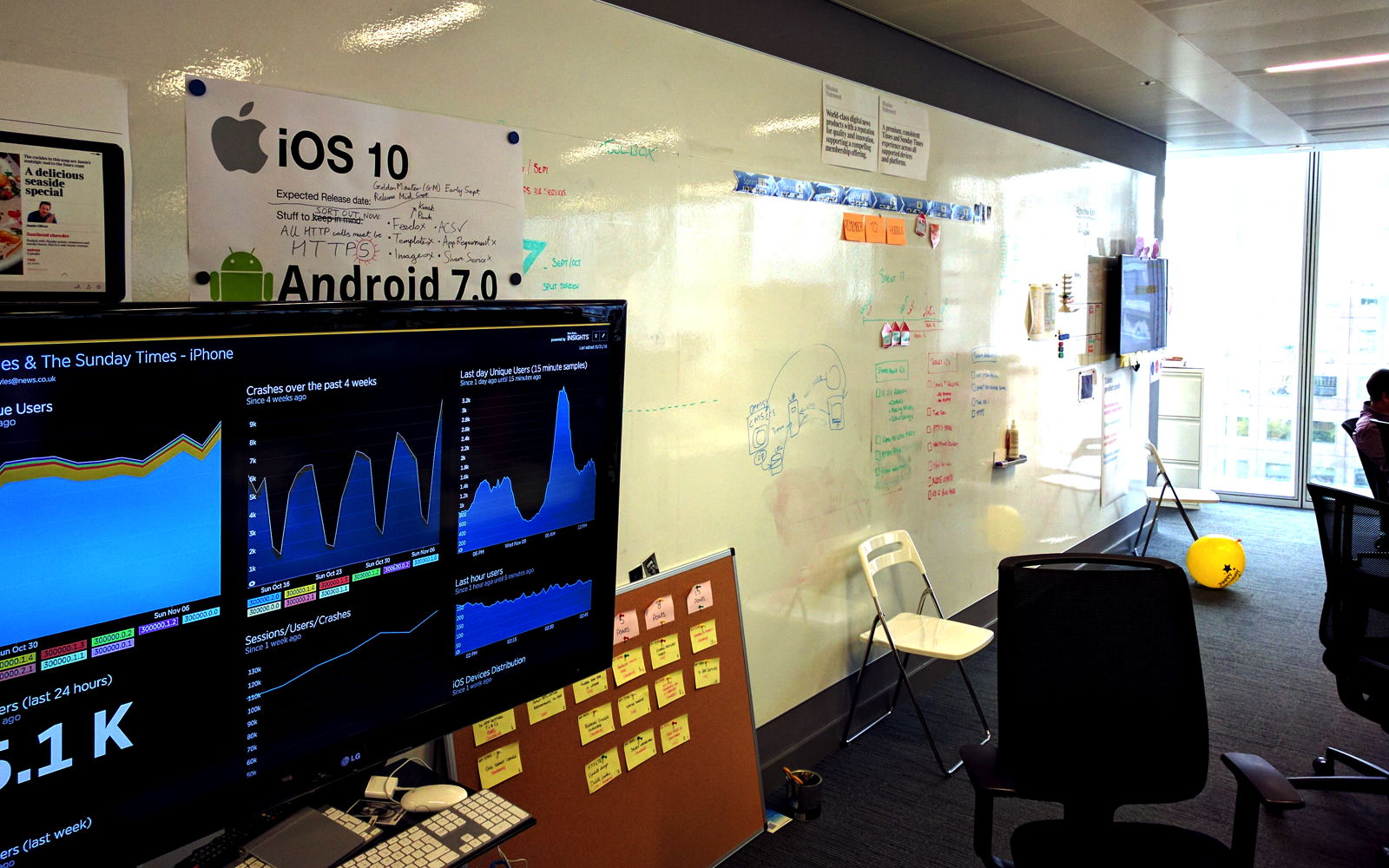
Copyright notice: (c) Adrian Kerry.
Team members who prefer working from home are a good indicator that your workspace is not up to the agile job. Those team members are by no means unfit for agile (team) work. They probably just need to get deep work done that they cannot accomplish in the office.
Another indicator for an unsuitable workspace is the widespread use of hearing protection devices or headphones by team members.
Being Agile Requires a Diversity of Workspaces
To become agile, your organization needs a diversity of workspaces to support all forms of creative work: focus, collaborate, learn, and socialize:
- Agile requires a large, flexible space for training, public ceremonies, e.g. sprint reviews or workshops. If you want to run user story mapping workshops with ten of your stakeholders, for example, you will need at least 10 meters (or 30 feet) of whiteboard space. (Rule of thumb: one meter per workshop participant.)
- Form follows function: A stylish office may please the eye but does not necessarily satisfy the needs of the creative worker.

- Agile teams require defined team spaces to create a sense of togetherness, not just any area within an open space.
- Agile requires space for collaborating in small teams of 2 to maybe 5 or 6 people.
- Agile requires silent workspace to for deep, focused work.
- Agile requires space for informal, ad hoc meetings of 2-3 people.
- Agile requires social spaces – e.g. cafés – that encourage informal networking. Cafés provide the serendipity of meeting someone interesting unexpectedly.
- Being agile also requires a budget for regular offsite events, such as workshops, to support pushing people gently out of their comfort zone. Familiar settings become less stimulating for innovation over time. Utilize the hardwired (saber-toothed tiger-driven) need of humans to be more alert in unfamiliar places to your advantage.
How can a great agile workspace be created?
Nowadays, a workspace looking great in an architectural publication no longer works if your agile transition shall deliver a return on investment. You only create a productive, agile workspace by putting the teams first and include them as early in the planning process as possible. Don’t just present the concepts from architects or interior designers. Live up to valued agile principles — such as transparency, interaction, and inclusion — when your organization is designing an agile workspace.
Conclusion:
Transitioning to an agile organization requires changing the available workspace in most cases. And buying a few additional whiteboards won’t get the job done.
Becoming agile requires an environment that fosters all four forms of creative work: focus, collaborate, learn, and socialize. And it should be up to the creative worker to choose the right space for each task.
Last, but not least: Include your teams when designing an agile workspace. People care much more about what they help to create. (Use the IKEA-Effekt to your advantage.)
What changes to your workspace did you make while transitioning to an agile organization? Please share with us in the comments.
Related Posts
Download the Scrum Guide Reordered for free.
Scrum First Principles — How to Elon Musk the Scrum Guide.
Scrum Training Classes, Workshops, and Events
You can secure your seat for Scrum training classes, workshops, and meetups directly by following the corresponding link in the table below:
See all upcoming classes here.

You can book your seat for the training directly by following the corresponding links to the ticket shop. If the procurement process of your organization requires a different purchasing process, please contact Berlin Product People GmbH directly.